
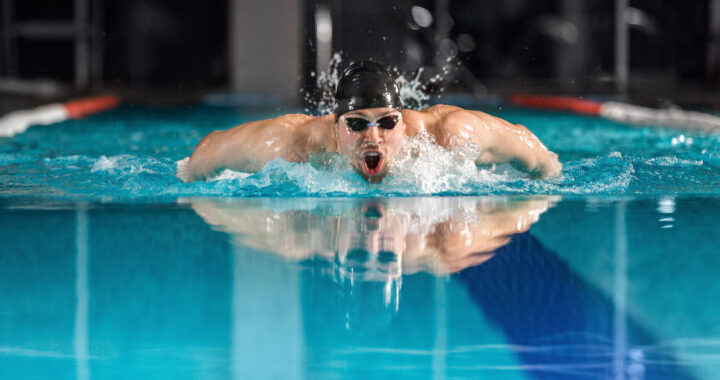
Every great swimmer begins with the same fundamentals; however, it is refinement that separates good from exceptional.
Swimming like a pro means understanding the mechanics behind every kick, pull, and breath. Therefore, rather than chasing speed alone, you will need to prioritise technique, timing, and control. When you improve your posture in the water, engage the right muscle groups, and practise deliberate drills, you build a stroke that is both energy-saving and powerful.
1. Master the Glide
The glide is where strong technique begins, setting the foundation for every stroke that follows. To maximise momentum and minimise resistance:
- Execute a Streamlined Push-Off: After pushing off the wall, resist the urge to move immediately. Instead, hold a strong, torpedo-like shape and allow your momentum to carry you forward.
- Perform a Push-and-Glide Test: Measure your performance by observing how far you travel without kicking or pulling. The greater the distance, the stronger your streamline.
- Avoid Breaking Alignment Early: Separating your arms or lifting your head reduces speed and wastes momentum.
- Practise the 5-Second Glide Challenge: At each session, hold a controlled glide for 5 seconds, focusing solely on body tension and alignment before initiating your first stroke.
Watch our swimming video to better understand how to perfect your glide like a professional.
@isplashswimschool Gliding is the foundation of efficient swimming. After pushing off the wall, let your body stay long and streamlined so you move smoothly through the water with minimal effort. Master this, and every stroke becomes easier, faster, and more controlled. #SwimTips #LearnToSwim #SwimmingBasics #PushAndGlide #BeginnerSwimming
2. Perfect Your Body Position
Your body position determines whether you glide smoothly or fight unnecessary resistance. To swim with control and ease:
- Maintain a Neutral Head Position: Look down towards the pool floor to preserve alignment. Lifting your head disrupts balance and causes your hips to sink, increasing drag.
- Keep Your Hips Properly Aligned: Ensure your hips remain level and your body stays parallel across the water’s surface. A horizontal position reduces resistance and supports smoother forward movement.
- Engage Your Core Consistently: Keep your torso firm and stable so your body functions as one streamlined vessel, and do not bend at the waist.
When alignment is correct, you will feel as though you are swimming downhill without forcing yourself forward.
3. Breathing Without Slowing Down
Breathing should support your stroke, not disrupt it. To maintain speed and momentum:
- Rotate to Breathe: Breathe by rotating your body to the side rather than lifting your head. This allows you to inhale quickly while preserving streamline and momentum.
- Alternate Sides for Balance: Alternating sides promotes balanced muscle development and improves overall stroke symmetry, helping you maintain better control in the water.
- Establish a Consistent Rhythm: Establish a consistent breathing pattern that matches your stroke timing, ensuring oxygen intake without interrupting propulsion.
4. Stroke Efficiency Over Strength
Swimming faster is not about pulling harder; rather, it is about learning technique to generate effective propulsion. To improve stroke performance:
- Maintain a High Elbow Catch: Initiate your pull with a high elbow position to “grab” more water. This creates a stronger hold and improves propulsion without unnecessary strain.
- Measure your Distance Per Stroke (DPS): Count your strokes per lap to assess performance. Fewer strokes with maintained speed indicate better technique and reduced drag.
- Reduce Wasted Movement: Eliminate excessive crossing over, dropped elbows, or rushed recoveries. Controlled, deliberate actions conserve energy.
- Apply Power Where it Counts: Apply force during the pull phase to drive water backwards with purpose.
5. Kick Smart, Not Hard
Kicking should support your stroke, not exhaust you. Rather than relying on constant force, use your legs strategically to maintain balance and rhythm. To optimise performance:
- Understand When to Reduce Your Kick: Some professional swimmers use a minimal kick to conserve energy during longer distances. However, stronger kicking may be necessary for sprint efforts or added propulsion.
- Choose Between a 2-Beat or 6-Beat Kick: A 2-beat kick offers endurance support, whereas a 6-beat kick provides greater speed and drive. Select the pattern that aligns with your distance and goals.
- Improve Ankle Flexibility: Flexible ankles create a more effective, fin-like motion, increasing propulsion while reducing drag.
- Synchronise Your Kick with Your Stroke: Practise your kick to complement your arm pull, ensuring coordinated, balanced movement during swimming.
6. Flip Turns That Maintain Momentum
Strong turns preserve speed and create a competitive edge. Instead of treating the wall as a pause point, use it as an opportunity to gain momentum. To execute flip turns:
- Execute a Tight, Controlled Flip: Tuck compactly, rotate quickly, and position your feet firmly on the wall. A tight rotation reduces resistance and prepares you for a powerful push-off.
- Streamline Immediately Off the Wall: Extend into a strong, torpedo-like position as soon as you push off, maintaining alignment just as established in your glide fundamentals.
- Maximise Your Underwater Phase: Use the underwater glide strategically before surfacing. This controlled phase allows you to carry speed forward before resuming your stroke.
7. Finding Your Optimal Rhythm
A well-developed rhythm allows you to sustain your performance over distance. Do not let your pace become rushed or erratic; instead, aim to balance speed with control. To build a consistent and sustainable rhythm:
- Balance Stroke Rate and Stroke Length: Increase your stroke rate for speed, but maintain sufficient stroke length to avoid shortening and rushing your movements.
- Count Your Strokes to Measure Efficiency: Monitor how many strokes you take per lap. Consistent or reduced stroke counts at maintained speed indicate improved control and reduced drag.
- Incorporate Tempo Training: Use structured pacing tools or internal timing to develop consistency. Controlled tempo work helps you sustain rhythm under pressure.
- Adjust Your Rhythm for Distance: Modify stroke rate and effort depending on whether you are sprinting or swimming longer distances, and practise adjusting your pace to ensure sustainable performance throughout.
Critical Mistakes That Hold Even Good Swimmers Back
Even strong swimmers can lose valuable speed through technical errors. Identifying these overlooked habits and working on them during practise can unlock performance gains. To refine your swimming stroke further:
- Avoid Late Breathing: Rotate to breathe before your pulling arm passes your shoulder. Delayed breathing disrupts timing and reduces efficiency.
- Keep Your Legs Active and Elevated: Allowing your feet to sink in freestyle increases drag and slows forward momentum.
- Control Your Body Rotation: Avoid over-rotating or under-rotating. Aim for balanced, controlled body roll to maintain stability and power.
- Slow Down the Recovery Phase: Rushing your arm forward above the water can disturb rhythm and alignment. A controlled recovery supports smoother stroke timing.
Swim Like a Pro with Expert Coaching at Isplash Swim School
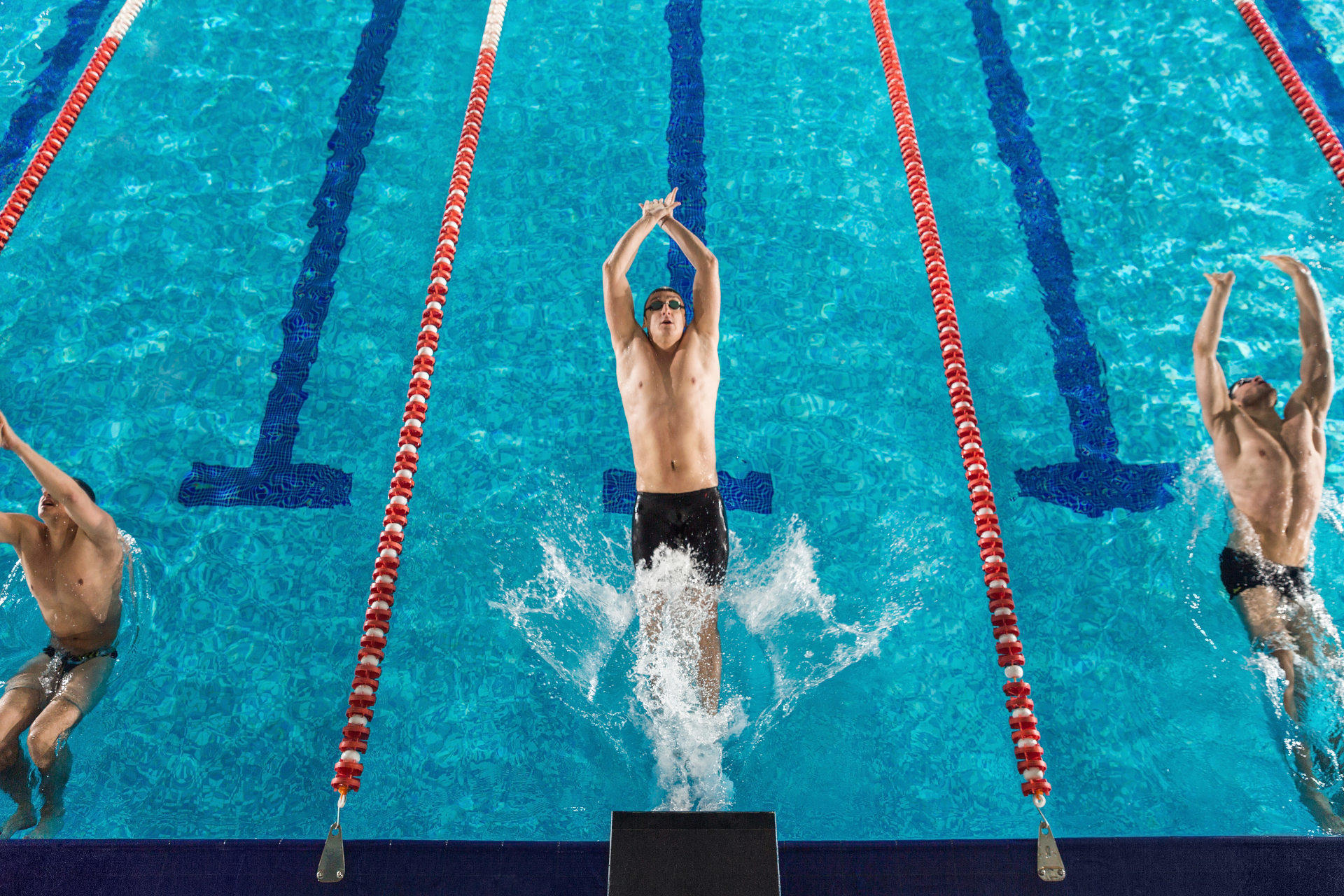
While consistent self-practise builds discipline, the fastest way to swim like a pro is through expert guidance.
That is what we offer at Isplash Swim School.
Our professional coaches can identify flaws in your body position, stroke mechanics, and timing that are often impossible to detect on your own. As a result, you receive precise corrections that lead to faster, more measurable improvement.
Whether you enrol in our swimming classes for adults to refine your fundamentals or are looking for a Singapore swimming course to support your child’s development, we provide focused, results-driven coaching tailored to each swimmer’s level and goals.
For accelerated improvement, we also offer private swimming classes, providing dedicated one-to-one correction, detailed stroke analysis, and customised training plans tailored specifically to your goals and current ability level.
Start your swimming lesson with Isplash Swim School today and swim with confidence and control.