
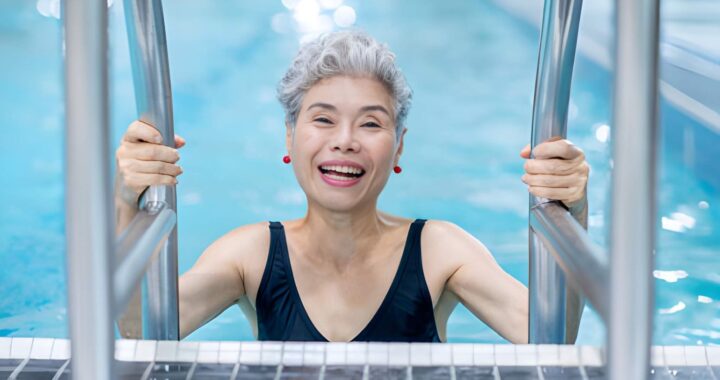
Staying active in later years is less about intensity and more about making the right choices, and swimming is one of them.You don't have to slow down just because your joints are telling you to.
Unlike high-impact exercises that can place strain on ageing joints and muscles, swimming offers a gentler yet effective alternative. Not only does it relieve aching joints, but it may also contribute to improved heart health and a more focused mind. With so many benefits to offer, it will be no surprise if more seniors start heading to the pool.
1. Relief for Aching Joints
For seniors with arthritis, stiff knees, or general joint discomfort, swimming is an accessible form of exercise. Thanks to water's natural buoyancy, the pool can support up to 90% of your body weight, significantly reducing the impact on your joints with every movement. This means you can stay active and keep your body moving without the pain or strain that often comes with land-based exercise. Clinically, aquatic exercise has been shown to outperform land-based exercise for joint pain relief.
2. Supports Heart Health
Studies have shown that swimming can improve heart health by improving circulation throughout the body. The pressure of water on the skin can help move blood efficiently, which may be particularly beneficial for those experiencing swelling in the legs or poor circulation in the feet.
By improving circulation, swimming helps the heart deliver oxygen and nutrients to the body’s cells more efficiently while removing waste. In addition, it may help maintain healthy cholesterol levels, supporting the heart and overall cardiovascular function.
3. Helps Maintain Focus
The benefits of swimming for the elderly extend well beyond the physical. Swimming, as an aerobic exercise, has been shown to stimulate the production of brain-derived neurotrophic factor (BDNF), a protein that supports the growth and maintenance of brain cells.
In addition, the coordination required to perform different types of swimming strokes engages multiple brain areas simultaneously, which may help maintain cognitive function and memory as you age.
4. Improves Balance and Reduces Fall Risk
Swimming may help improve balance in senior citizens by engaging major muscle groups, such as the core, legs, and upper body. As these muscles become stronger and more coordinated, they may experience better stability, which in turn can reduce the likelihood of falls.
In fact, research has shown that swimmers are 33% less likely to fall compared to non-swimmers and most notably, swimming was the only form of exercise that retained this protective effect, outperforming even running and golf.
5. Aids Flexibility and Range of Motion
Seniors may experience stiffness as joint mobility gradually declines with age. Swimming may help counter this by providing a supportive environment in which the body can move more freely through a wider range of motion.
By regularly performing swimming strokes that involve reaching and stretching, seniors may keep their joints supple and maintain flexibility.
6. Tones Muscles
Swimming works as a full-body exercise that may help tone every major muscle group. Each stroke tends to target different areas. For example, freestyle engages the arms, shoulders, and core, so incorporating a variety of strokes can target multiple muscle groups and promote strength.Wondering how this compares to other forms of exercise? Find out in our guide on whether swimming or running is the better workout.
7. Promotes Relaxation
Swimming may promote relaxation by creating a calming, immersive experience for both body and mind. The steady rhythm of strokes and breathing can help slow down thoughts, allowing seniors to focus on the present moment.
In addition, the sensation of water moving across the body can feel soothing, which may help ease physical tension. The quiet, peaceful environment of the pool further supports stress relief.
8. Supports Spinal Comfort
Swimming may support spinal comfort by reducing the pressure that gravity places on the back. The buoyancy of water helps support the body, reducing impact on the spine and allowing for more comfortable movement. It’s also good to note that research has shown that aquatic exercise can meaningfully reduce chronic back pain.
Moreover, even if you are not into swimming, you can still benefit from walking in waist-deep water, as the buoyancy reduces pressure on the joints and back while the water’s resistance supports movement, promoting mobility.
9. Improves Blood Circulation in the Legs
The horizontal position during swimming may help improve circulation in the legs by facilitating blood flow back to the heart. The buoyancy of water reduces pressure on the feet and legs, making it easier for blood to move through.
In addition, the leg movements involved in swimming help strengthen muscles that assist in pushing blood upward from the legs back towards the heart, which may be beneficial for seniors experiencing conditions such as varicose veins or swelling.
10. Manages Menopausal Symptoms
Swimming also offers several benefits for women experiencing menopause. Research has shown that regular aquatic exercise improves physical fitness and quality of life in postmenopausal women which includes cardiovascular endurance, strength, and overall wellbeing.
Water-based exercise can help improve alertness, mental clarity, and energy levels, while encouraging the release of endorphins, which may support a more positive mood. Beyond these mental benefits, swimming in cooler water may help ease common physical symptoms such as hot flushes and mood swings. Moreover, regular water-based activity can support circulation, aid metabolic changes, and improve sleep quality.
To enjoy these advantages in a comfortable and supportive setting, you can join our women's swimming classes.
How Often Should Seniors Swim?
As a general guide, seniors who are new to swimming should aim for two 30-minute sessions per week to start. This gives your body enough time to adapt and recover without overexertion.
Once you feel comfortable in the water, building up to three times a week is ideal for maintaining cardiovascular health, joint mobility, and muscle tone. Even a single session can make a meaningful difference.
That said, the best frequency is the one you can sustain consistently. From experience coaching senior swimmers, those who start with shorter and more frequent sessions tend to progress faster.
Most importantly, it is enjoyment that matters. Swimming works best as part of a balanced routine, pairing well with lighter activities such as walking, yoga, or gentle stretching on rest days.
How Swimming Compares to Other Activities for Seniors
Still wondering how swimming stacks up against other exercises you may already be doing? Here is a quick comparison.
| Exercise | Joint Impact | Full-Body Workout | Cardiovascular Benefit | Suitable for Seniors |
|---|---|---|---|---|
| Swimming | Very Low | Yes | High | Yes |
| Walking | Low | No | Moderate | Yes |
| Cycling | Low | Partial | Moderate | Yes |
| Running | High | Partial | High | Sometimes |
| Yoga | Very Low | Partial | Low | Yes |
Swimming is one of the few exercises that combines very low joint impact with a full-body cardiovascular workout, making it a strong choice for seniors at any fitness level.
Swimming for Seniors Made Simple at Isplash Swim School
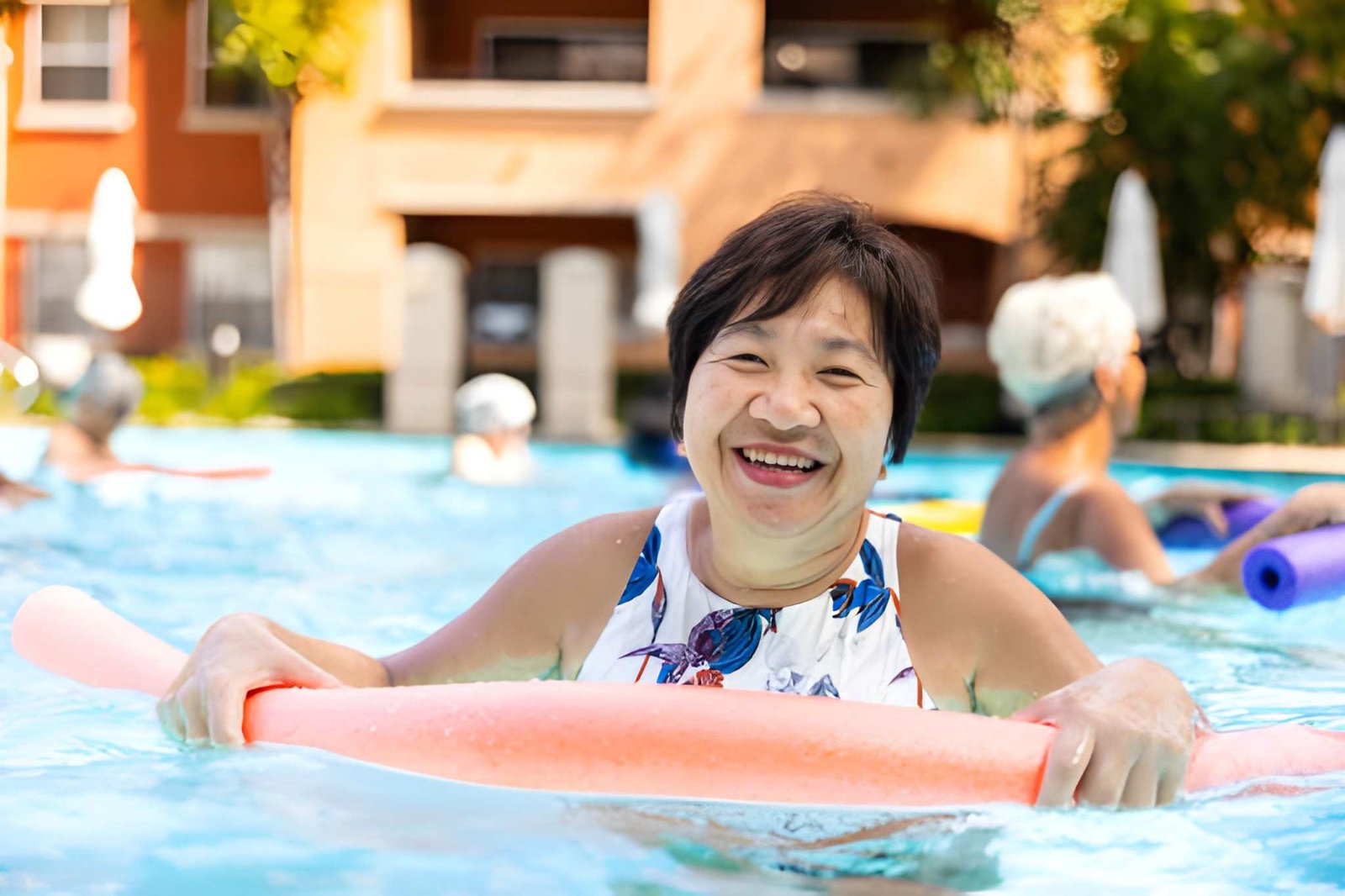
No matter what age you start swimming, professional guidance can help ensure a safe and enjoyable experience. If you’re unsure of where to start, fre not! Many of our senior swimmers came to us having never swum before or returning after years away from the pool.
At Isplash Swim School, we offer swimming classes for adults of all ages, with coaches certified under NROC and AUSTSWIM, trained to adapt techniques specifically for senior learners. Better yet, if you are a Singapore citizen aged 65 and above, entry to all ActiveSG pools is completely free, making it one of the most accessible ways to stay active.
Lessons are available at convenient ActiveSG venues, which covers our flagship locations, overring easy access for participants!
Isplash Swim School’s Flagship locations:
- THE CHEVRONS (Jurong East)
- ActiveSG Jurong West
- ActiveSG Jurong Lake Gardens
- ActiveSG Bukit Batok
- ActiveSG Choa Chu Kang
You can also contact our coordinators for a free matching service to find the right instructor tailored to your fitness and wellness goals.
Join our swimming classes for adults and discover how swimming can support your health and vitality.
References
- Aquatic Exercises for Patients with Osteoarthritis: Systematic Review with Meta-Analysis. Healthcare (Basel), 2022. https://pmc.ncbi.nlm.nih.gov/articles/PMC8955208/
- Swimming and Brain-Derived Neurotrophic Factor (BDNF): Effects on Cognitive Function and Memory. PMC Review, 2021. https://pmc.ncbi.nlm.nih.gov/articles/PMC8191402/
- Swimming and Fall Prevention in Older Men: The Concord Health and Ageing in Men Project. American Journal of Epidemiology, 2014. https://pubmed.ncbi.nlm.nih.gov/25193746/
- Aquatic Exercise for Chronic Low Back Pain: A Randomised Clinical Trial. PMC, 2022. https://pmc.ncbi.nlm.nih.gov/articles/PMC8742191/
- Effects of Aquatic Exercise on Physical Fitness and Quality of Life in Postmenopausal Women: Systematic Review and Meta-Analysis. Frontiers in Public Health, 2023. https://pubmed.ncbi.nlm.nih.gov/37361170/